
The primary purpose of hearing screening in birth to three-year-olds is to identify children with hearing loss as early as possible so they can receive timely/early intervention and support, maximizing their potential for speech, language, and overall development. Speech delay can be an indicator of hearing loss.
RT hearing screen forms are meant to be conducted online at intake, or as needed. OAE devices are used during an in-person home visit.
If hearing screening is completed within two months of the intake or after obtaining consent for annual evaluation, the consent to evaluate will serve as consent for this screening. If this screening is independent of the intake/annual and outside the two months, the provider will deliver PWN and obtain a Consent to Evaluate.
Documentation Guideline:
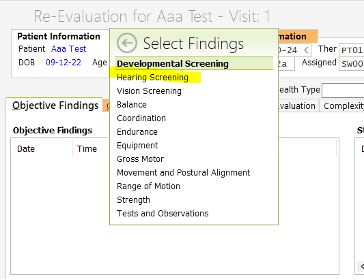
Under Objective Findings – Hearing Screening, document the recommendation from the Hearing Screen Questionnaire. Indicate whether the result suggests a referral or a pass.
Billing Documentation: No screenings (NICU prior to enrollment, developmental, hearing, or vision) are billed out, so the only necessary billing documentation is to list the screening clock times under the Long-Term Therapy Note type “Screening”.