
Annual eligibility is re-established by two providers who conduct a developmental evaluation that results in a 50% delay, medical diagnosis, or by clinical opinion, and is completed with two providers from different disciplines. The eligibility meeting will occur as a result of this evaluation, and result in a renewal of the IFSP or exit from services. Eligibility is re-established on and annual basis as opposed to the previous tradition of re-enrolling children because they have been previously enrolled without consideration for the current delays the child experiences (the “Once Part C, Always Part C” approach to eligibility).
Determining Eligibility at Annual Eval/Re-enrolling Children Practice
Eligibility is established in the same manner at annual as it is at initial evaluation, with the following considerations:
State guides providers to consider ICO where the child demonstrates a 25% to 49% delay. The ICO statement:
If the annual evaluation results demonstrate there is no delay the IFSP team (parents, service coordinator, and service providers) decides that IFSP goals are met, services are no longer needed, and the family is in agreement then they are ready to transition out of Part C/EI.
PIC will complete an evaluation with the family and child and schedule to be completed at the annual due date and no more than two months in advance of the child's annual due date. Two providers are required and use an IDA-2. If feasible, use the original IDA-2 from first eligibility evaluation.
When completing the individual documentation for the re-evaluation, the PSP needs to select “Re-Evaluation” as the type in order for the COS/progress tab to appear.
Consent PWN, CTB, and request Med Records
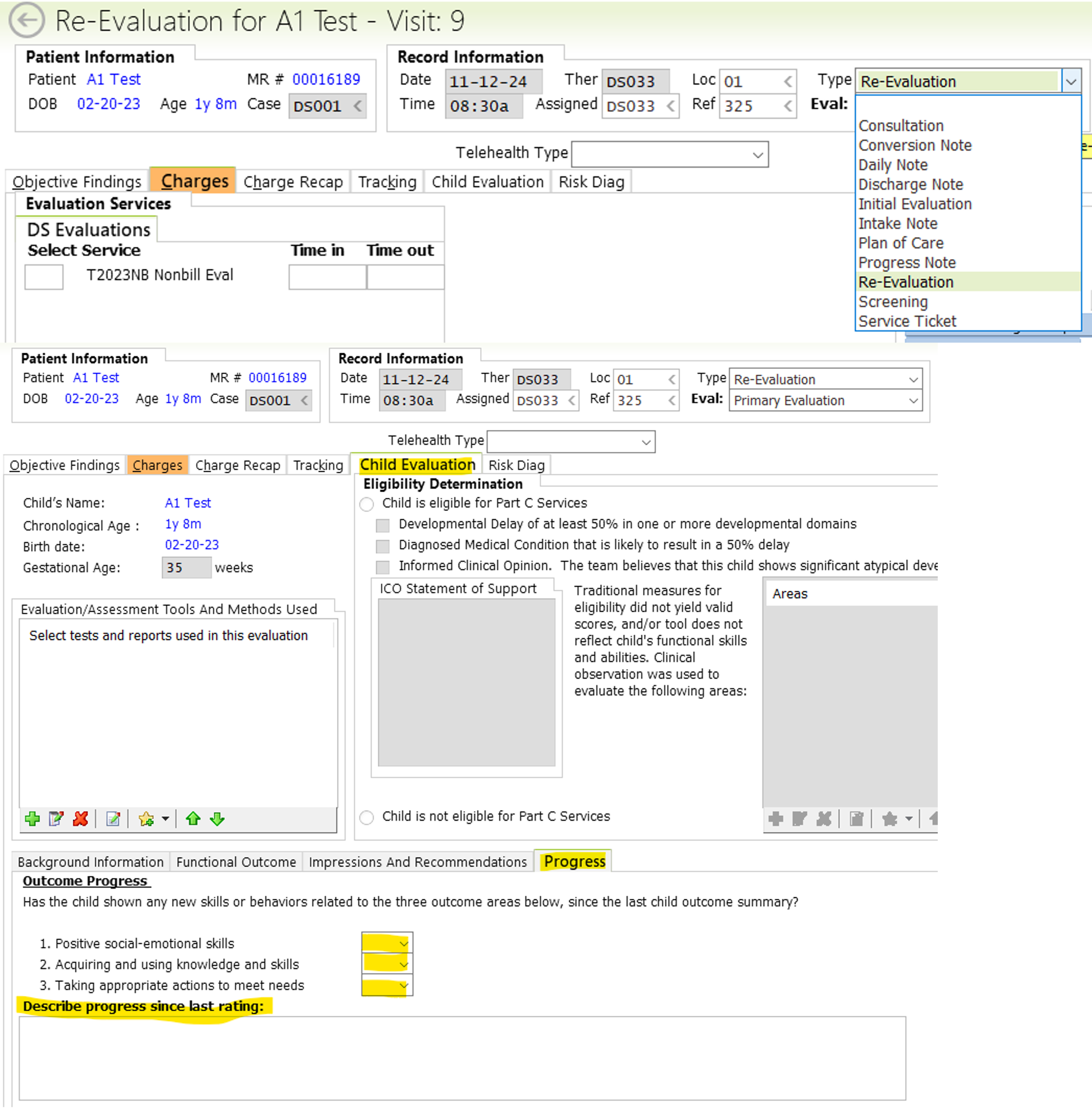
**If the PSP does not select Re-Evaluation as the type, then they will be required to report exit outcomes and progress even if the evaluation was within 3 months of exiting the child.**
If the child is determined eligible for services:
The primary service provider (PSP) will:
- Prepare for the Individual Family Service Plan (IFSP) by
- Asking the family who they would like to invite to the IFSP meeting
- Scheduling times and locations convenient for the family
- Remind the family of the IFSP process, if necessary (a dynamic plan, developed by the team that guides the provision of family- centered early intervention supports and services based upon the changing needs of the child and family)
- Provide Prior Written Notice
- After completing the evaluation visit, the primary service provider will combine the Functional Evaluation report
- The second provider will complete an Evaluation report in RainTree
If the child is not eligible:
- The primary service provider will:
- Give parent a Prior Written Notice that the child is not eligible for ILP services and request parent signature
- Have the family complete signature pages
- Support the family with additional information if appropriate (information on normal developmental milestones, etc.)
- Complete the Functional Evaluation
- Provide a copy of the Functional Evaluation for the parents, either via mail or at a follow-up visit, if scheduled, and to the physician or other information sharing that has been requested
- The second discipline attending the evaluation will complete an Evaluation in Raintree.