
PIC uses a Release of Information (ROI) to protect family privacy while allowing the exchange of information necessary to support children and families receiving services. The ROI documents a family's authorization for PIC to request information from, or release information to, identified individuals or organizations.
PIC’s standard practice is to obtain a current, valid ROI before requesting or releasing confidential information. Information will not be requested or released without appropriate authorization unless the disclosure is required or permitted by law, regulation, contract, or program requirements.
This section provides the general use of ROIs. Additional guidance for specific situations, including medical records, communication with primary care providers, legal involvement and custody situations, and HIPAA and FERPA requirements, is provided in the related sections of these Program Guidelines.
Definition of a Valid ROI
A valid ROI is a completed authorization that identifies the individual or organization authorized to exchange information with PIC, identifies the information that may be released or requested, identifies the purpose of the exchange, and has been authorized by the appropriate legal decision-maker.
A valid ROI must be current and available in the child's record before PIC requests or releases information. Before requesting or releasing information, staff will verify that the ROI names the individual or organization involved and that the type of information being exchanged is authorized.
An ROI may be limited by the family, including limits on the type of information shared, the individuals or organizations involved, or the purpose of the communication. Staff will honor those limitations when indicated.
Staff will use the ROI for communication involving confidential information outside of PIC. Before requesting or releasing information to another provider, individual or agency, staff will confirm that a current ROI is in place.
An ROI does not mean that all information may be shared without consideration. Staff will share only the information needed for the identified purpose. Information shared will support the child's services, coordination of care, or another authorized activity.
PIC will not re-release or redistribute records or documents created and maintained by another individual or organization. When records or information from another source are needed, staff will direct requests to the originating provider or organization unless the applicable authorization or legal requirement specifically permits PIC to release the information.
PIC values collaboration with families, medical providers, and community partners. Staff will explain the purpose of an ROI, answer family questions, and describe the benefits of coordinated communication.
Families have the right to choose whether they want PIC to communicate with other individuals or organizations, and PIC respects those decisions. When a family declines to authorize communication, staff will document the discussion with the family and follow the applicable guidance for that situation.
Families may revoke an ROI at any time. Staff will ensure that a current authorization is in place before requesting or releasing information and will follow PIC procedures when an authorization is revoked.
Special Considerations for Children Involved with OCS
Children involved with the Office of Children's Services (OCS) may have different authorization requirements depending on the child's legal custody status, placement, and the type of information being requested or released.
OCS involvement does not automatically mean that every communication requires an OCS-signed ROI, nor does it mean that all communication follows the standard ROI process.
Staff will refer to Release of Information for Children Involved with OCS before requesting or releasing information for a child involved with OCS. The link and the section provide guidance regarding authorization rights for medical records, educational decisions, IFSP participation, caregivers, foster placements, and ILP transfers.
Determining Whether an ROI is Required
Before requesting or releasing information, staff will determine whether:
a current ROI authorizes the communication;
another legal or program requirement allows the communication without an ROI; or
additional guidance is needed because of legal custody, placement, or other circumstances.
When an ROI is required, staff will not request or release information until the authorization is completed and available in the child's record.
Sending Records
Before releasing records, staff will confirm that the ROI authorizes the exchange and that the information being shared is within the scope of the authorization.
PIC does not accept verbal consent as authorization to release records.
Creating an ROI in RainTree
When initiating an ROI in RainTree, staff will identify whether information is being released to or obtained from the identified individual or organization. The ROI will accurately reflect the purpose of the exchange and the information that may be shared.
The appropriate legal decision-maker must authorize the ROI before information may be exchanged. RainTree records the date of the electronic signature.
Some organizations, including Providence and ANMC, require a handwritten or "wet" signature. When a family is unable to complete an electronic ROI, staff may obtain a paper ROI and upload the completed document into RainTree.
Revoking an ROI
Families may revoke an ROI at any time. PIC does not currently have an electronic revocation process in RainTree.
When a family requests to revoke an ROI, provider staff will document the discussion with the family in the communication log. Documentation will include that the family requested revocation and that written confirmation of the request was requested by text message or email.
The family may complete the revocation section on the reverse or second page of a paper ROI. A written request submitted by email or text message may also satisfy the written revocation requirement.
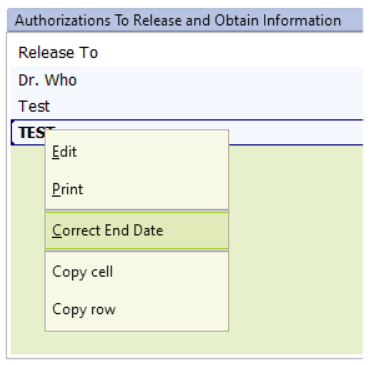
Administrative staff will update the ROI in RainTree by adding an end date to the authorization.
ROI End Dates
When a child exits PIC services, ROIs on file will automatically receive an end date of 90 days from the child's exit date.
Administrative staff may manually update ROI end dates when needed, including:
a family revokes an ROI; or
a child who is no longer in OCS custody will get a new ROI from the new legal guardian because updated authorization is required as a child is discharged from their custody.
Exceptional or Emergent Circumstances: Release or Exchange of Information Without an ROI
PIC’s standard practice is to obtain a signed ROI before requesting or releasing confidential information.
Release or exchange of information without an ROI is limited, exceptional, and permitted only when specifically authorized by law, regulation, contract, or program requirements.
Staff will not release information without an ROI unless the situation meets a recognized exception and the applicable requirements have been followed.
Examples of circumstances where an ROI may not be required include:
Mandatory child abuse reporting
Court orders or subpoenas
Health or safety emergencies
Internal PIC communication necessary to provide services or carry out organizational responsibilities
Billing and Medicaid activities
Audits or authorized monitoring activities
Required State Infant Learning Program reporting
Communication with the referral source before eligibility as permitted by program requirements
When staff are uncertain whether an exception applies, they will consult applicable guidance or a supervisor before releasing information.
Links to ROI Related Sections